
26 Aug 2019
TFY Ireland
TFY stands for Theological Foundations for Youth. It is a week long conference for young people in the Reformed Presbyterian Church ages 16-22. Patterned on the various TFY events in the American RP Church, the Irish RP TFY is an intensive course in the Biblical doctrines that are at the heart of the Christian life. Over the course of the week those who attend receive in-depth lectures given by experienced pastors on the kingship of Christ, the doctrine of the Church, Covenant theology, worship, worldview, apologetics, evangelism and Church History. These topics also give an opportunity to explore and discuss some of the distinctive principles of the RPCI. There is a bit of time for relaxing and having fun as well, but the emphasis of the week is very much on teaching. This year was the first TFY Ireland and Rachel Nelson from North Edinburgh RPC was there all week and Eilidh Campbell from Glasgow RPC was able to be there for some of the week. Below are their thoughts on the week.
The first day you spent looking at the Kingship of Christ with lectures by Rev. David McCullough. What was something that stuck with you from the lectures this day?
Rachel: This was a very appropriate subject to start off with because it set the scene for the rest of the week’s lectures, outlining why we should be concerned with Christ’s church, His world, and how to engage with both: it is because all are under His kingly rule, and so it really matters how we approach them. I was challenged in this lecture to think more seriously about how I view (or don’t view) Christ as the true, living king of all His creation, and the seriousness of people rejecting His rule over their law and decision making in society.
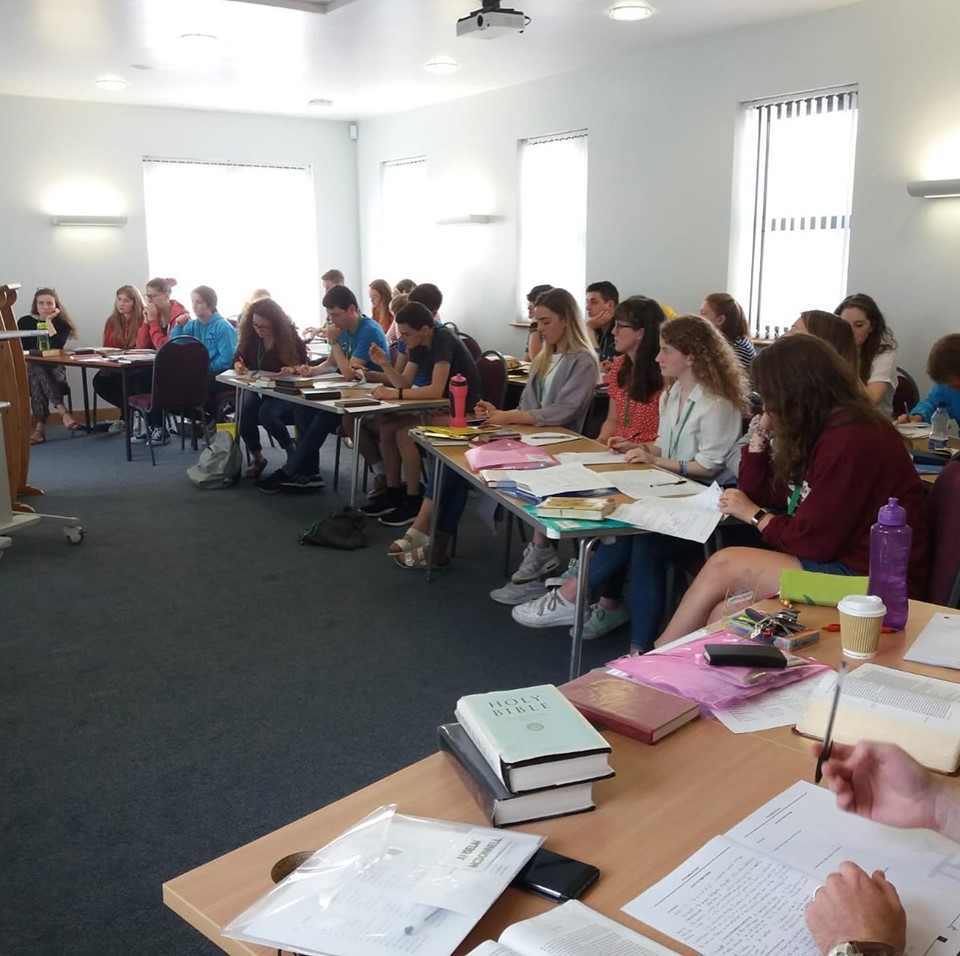
The second day, Rev. Philip Moffett focused on The Church. What was something that really made an impression on you this day?
Rachel: This lecture clarified for me what the identifying marks of a true church are: one that preaches the word of God, properly administers the sacraments, and faithfully administers discipline. I’ve often found it hard to distinguish between true and false churches and so these were helpful criteria to focus on and discuss as part of the lecture.
Eilidh: Rev. Moffet’s lecture made me a lot more appreciative of my church, it gave me a better understanding of the church’s history and even customs. The Covenanters strived for a oneness and unity in the church, and we should have that same passion in today’s day and age. One way we can do this is by giving of ourselves to our congregations – as we do so we are building one another up (Proverbs 27:17). Our soul focus in the church shouldn’t be our differences. The church’s main focus is to preach the Gospel of Jesus Christ, it’s a message for everyone.
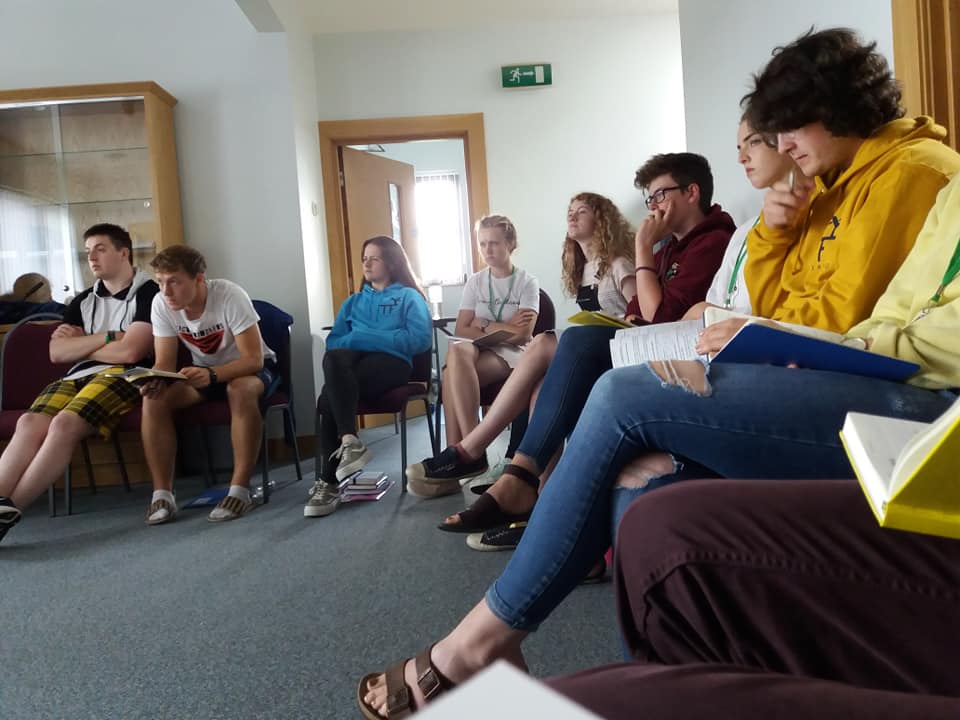
Day 3 you all looked at Covenant Theology with Rev. David Sutherland and Worship with Rev. Warren Peel. What was something you learned from this day?
Rachel: This was a day that had lots to take in, but it was so interesting! As an RP I’ve grown up familiar with the word ‘covenant’ but have never taken much time to work out what exactly the term means and how it affects the church. David’s talk really highlighted for me the ‘big picture’ view of the Bible and how, rather than being a random collection of short stories, it is one big story of God’s redemption and how it has been worked out in stages throughout the Bible, with each new covenant revealing more aspects of His salvation plan. I don’t think I’ve thought of it like this before, and wasn’t aware of the all the different covenants throughout the Bible: the Adamic Covenant, Noahic covenant, Abrahamic covenant, Mosaic Covenant, Davidic covenant, and the New covenant. I’d also like to follow up this lecture by learning more about the alternate points of view held by other churches on this topic, specifically New covenant theology and dispensationalism, which David mentioned and which I knew little about before this point.
Warren’s lecture on worship was also really helpful in further developing a topic that I have always had a general knowledge of but again, never studied in much detail: the RP position on worship and its rationale. The key thing I took away from this talk was that I need to be more serious in my approach to worship: rather than coming from a perspective of ‘what seems right to me’ I need to look at it from a perspective of giving God what He has asked for and therefore what glorifies Him. It was especially interesting to hear about the meanings of specific words in the Bible relating to ‘worship’, including the difference between the general word for worship as ‘service’ (what we do with our lives from day to day as we seek to honour God), and the word for taking special time to acknowledge and praise God, corporately and privately: a word which means to ‘fall on your face’, and how these two aspects of worship are unique and different.
Eilidh: I was pleased to have a fellow Scot taking one of the lectures!! David Sutherland was speaking on covenant theology. I think it’s safe to say that if you were to ask me what covenant theology was before TFY I would struggle to tell you. Mr Sutherland explained it very well, at the beginning of the lecture he began with an analogy. When you look at a stick of rock the inscribed message goes right the way through. The same can be said of God’s “Covenants” to His people throughout the Bible. Covenant theology is therefore a dominant theme in the Scriptures. The covenants made in the Bible are a reminder to us of Gods grace as well as His judgment. I found a lot of the lecturer was a lot to take in at points which is why I feel the discussion and question time at the end was so good just to clarify some of the points made.
I found the lecture on worship very encouraging. It was really a reminder that sin effects every aspect of our actions including worship. That’s why we alone are in no position to know what God wants, we need to go to His Word for all things. In our fallen nature, we want to be the centre of all we do, but theology, creation, salvation, the covenants etc. all point to God, and in our worship we are to remember that as we sing the Psalms and as we share fellowship together we are worshiping a wonderful God. Psalm 75:1


On day 4 Rev. Mark Loughridge taught on Worldview and Apologetics. What was something you learned from this?
Rachel: The content of the lectures on worldview and apologetics were so timely and relevant to our society today, especially in light of current issues such as redefining marriage and introducing abortion in Northern Ireland, which brought much discussion during the week. I really appreciated Mark’s perspective that we ought to begin with hearing people’s worldview before we launch into sharing our own, as so often the effectiveness of our evangelism is diminished by our tendency to rush in and share our message in terms that don’t make sense to our listener in a post-Christian society, before listening to what their worldview actually is and where they are coming from. Often, as Mark put it, we can run the risk of ‘picking leaves off the trees’ without actually addressing the root of the issue, which is our view of the world and our place in it. In terms of approaching evangelism, I found it useful when Mark showed the difference between approaching Romans 1 and Acts 17: Romans 1, addressing the blindness of unbelievers and their love of idols is of course true, but it is written to believers, not as a script to read to unbelievers (in most cases). On the other hand, Acts 17 shows the outworking of the Christian’s grasp of Romans 1 and how to use that knowledge when engaging with unbelieving society: Enter the discussion by finding a relatable starting point/common ground, Explore the unspoken assumptions behind the worldview, and Engage with people: ask questions. Be prepared to really listen, rather than listening only with the purpose of thinking of an answer to refute what has just been said. Get people to ‘do the work’ of explaining their own worldview, as it will ultimately only produce more questions than answers! To summarise the lecture’s main message: in evangelism and apologetics, tackle worldview before tackling the ‘nitty gritty’ issues. I found that very helpful.
On the last day, Rev. Raymond Blair lectured on Covenanter History. What was something that stood out from these lectures?
Rachel: Raymond’s overview of the history of the Covenanters and the origins of our church denomination was far from a dusty history lecture, it was a really exciting and fitting way to end a week full of talking about what we believe in a church- as we saw how real men and women like ourselves were willing to lay down their lives and sacrifice all for the sake of Christ’s kingdom, and how that level of commitment to Christ is what we all should have. I found it especially helpful to gain an overview of the timeline of the reformation and its effects on Scotland and Ireland in particular, as my previous knowledge of that period of history was quite disjointed. It was interesting to discuss our reflections afterward, such as how this history relates to today: when is it right to retaliate against persecution and removal of religious freedoms? How could we envisage that happening today? Although we are very thankful for the legacy of the Covenanters, Raymond highlighted how they were just fallible men and women like ourselves and made mistakes, yet there is still much we can learn from their great faith for today.
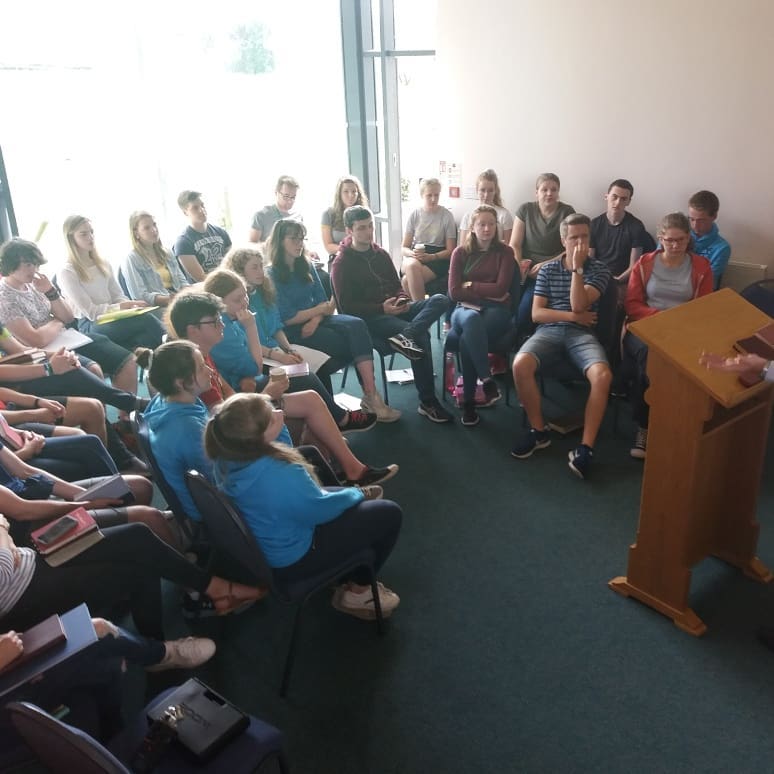
It wasn’t all lectures. What were some of the activities you did throughout the week?
Rachel: Although there were many lectures and discussion sessions, they were balanced with time for relaxation too. At the end of each day after supper, there was time to play board games/ table tennis/volleyball or just to chat and consume copious amounts of tea and traybakes. On Tuesday afternoon there was a free time slot to take part in optional off site activities which included an inflatable water obstacle course, crazy golf, ice skating or coffee shop visiting. We also went for a walk together on Wednesday afternoon. Although it wasn’t an activity-filled week like camp, it didn’t feel too lecture heavy and it actually was just such a joy to spend time discussing God’s word and what we were all learning together during meal times and free time slots.
Eilidh: We would meet together in the afternoon to study the book Maturity together. Maturity by Sinclair Ferguson was a very thought provoking yet encouraging book. There were so many good discussions to be taken from it. I liked the analogy of the anchor: “A boat that has not been anchored is at the mercy of the tides; the currents of the world will guarantee our departure from the moorings of the gospel unless we are anchored in the saviour Jesus Christ.” There were many other excellent metaphors throughout the book. I would recommend it!!
On Thursday afternoon you went and did outreach with the two RP churches in Belfast. What kind of things did you do?
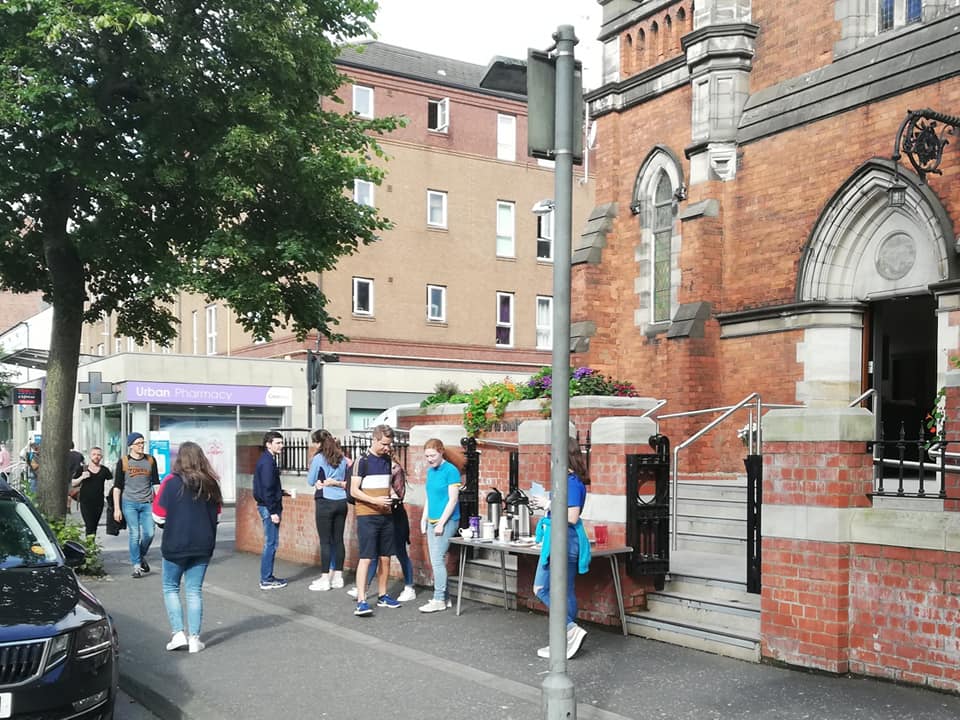
Rachel: On Thursday afternoon we were able to follow up what we’d learned from the morning lecture on apologetics by going out to engage in evangelism in Woodstock Road and Shaftesbury Square RP churches. The team in Woodstock road helped to deliver leaflets in the surrounding areas which advertised the presence of the church, and the team in Shaftesbury square helped to man a tea and coffee stall outside the church where they gave out free drinks and engaged in conversation with passersby. Some good conversations were had and it was encouraging to work with these local congregations.
Overall, did you enjoy the week and would you recommend it to others?
Rachel: Short answer – yes! I wasn’t entirely sure what to expect from TFY, but I came away built up in my faith as well as filled with fresh knowledge and a desire to dig even deeper into each topic, and to find out even more about what I believe. Above all, I came away with a sense that I need to take my faith and practice more seriously: that I should constantly be seeking to do what honours God when it comes to His worship, and that I should know why I do and believe the things that I do. It was an ‘intense’ week in many ways, but above all it was a great week of encouragement through spending time with likeminded believers, who were all enthusiastic about learning more about God and ultimately how to please Him. The discussion times were great and we all really appreciated the fact that each lecturer stayed behind for meals to listen to and answer any further questions that we had. I would really recommend TFY to anyone who wants to know more about what our church believes, and I believe what should be everyone! It’s a great environment to ask questions and find out more, while enjoying a rich time of fellowship.
Eilidh: As I said before, I found the discussions really useful both after the lectures and through the day with everyone taking part in TFY. It’s given me a lot to think about for sure.