Airdrie Mission Team
1 Aug 2026 | Uncategorised
From mid-June to the beginning of July was a busy time for the Airdrie congregation as we had the American Mission Team, the Kids Club…


On the 19th January 1546, Scottish reformer George Wishart was betrayed by the Earl of Bothwell. Wishart had been arrested on the 16th January and promised protection by Bothwell.
Learning he was going to be protected, Wishart said “I thank God that one so honourable as your lordship receives me this night, being assured that having pledged your honour you will preserve me from injury without order of law. The law, I am not ignorant, is corrupt, and is used as a cloak under which to shed blood. But I less fear to die openly than to be slain in secret.”
Bothwell replied “Not only shall I protect you from secret violence, but I shall shelter you from the designs both of the governor and cardinal. In my keeping you shall be secure till I restore you to freedom or bring you again to this place.”
But three days later we find an entry in the Privy Council of Scotland’s records. It says “Meeting at Edinburgh, 19 January 1546. Present: Governor, Cardinal, bishop. of Galloway, Earl Bothwell, abbots of Paisley and Culross, lord Borthuik, Clerk Register. Business:-Earl Bothwell bound to deliver Master George Wishart to the Governor before 30 Jan.”
Wishart would eventually be hanged and burnt at the stake on the 1st March 1546.
Painting is of George Wishart Administering the Sacrament in the Prison of the Castle of St Andrews on the Day of his Execution by Thomas Duncan (1807–1845)

From mid-June to the beginning of July was a busy time for the Airdrie congregation as we had the American Mission Team, the Kids Club…
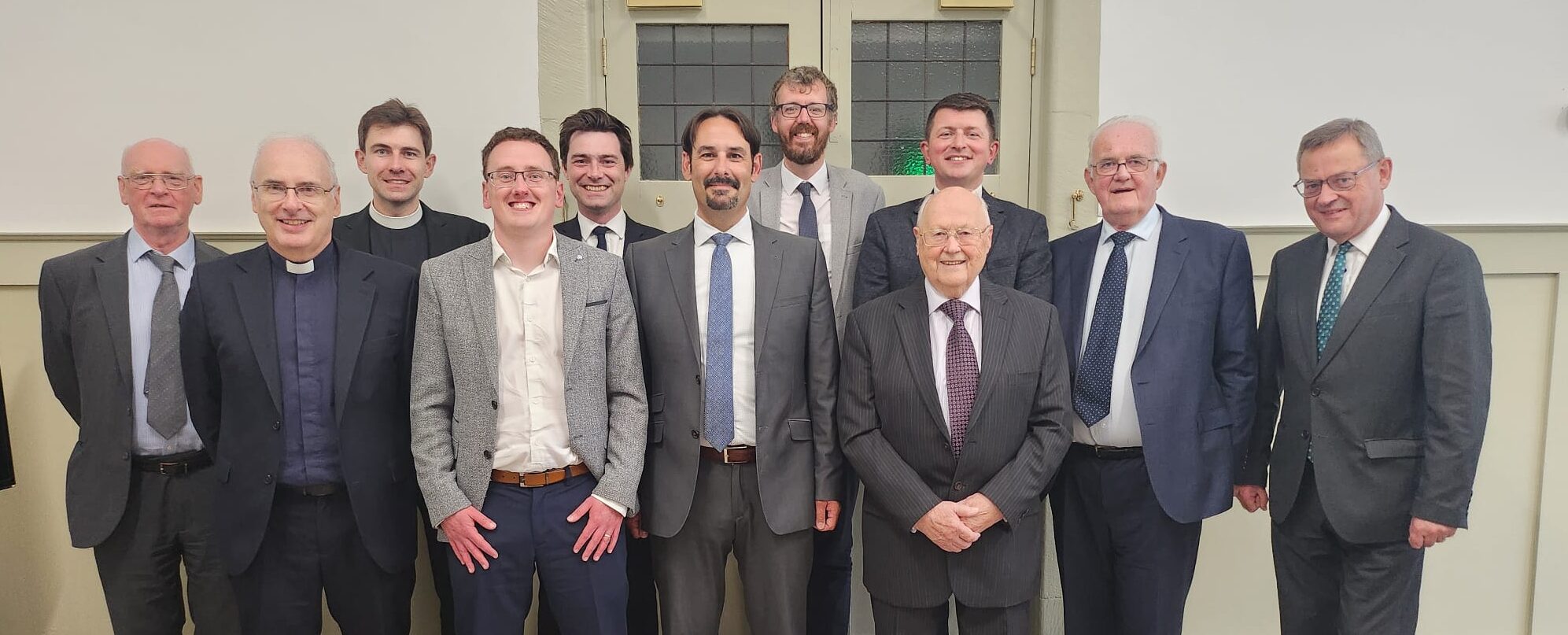
Back row left to right: Rev. Archie McPhail (North Edinburgh); Rev. Jonathan Baxter (Glasgow); Dr James Fraser (Stranraer); Rev. Stephen McCollum (Airdrie); Rev. Robert McCollum…