Airdrie Mission Team
1 Aug 2026 | Uncategorised
From mid-June to the beginning of July was a busy time for the Airdrie congregation as we had the American Mission Team, the Kids Club…


On the 13th April 1640, the fourth parliament of Charles I met in Westminster. This would become known as the “Short Parliament” because it sat for less than a month. It was the first one called in 11 years and brought to an end the period when the King ruled without parliament known as the “Personal Rule.” The main reason for Charles recalling parliament was money.
Following the signing of the National Covenant by the Scots two years earlier, the king raised an army to crush these Covenanters (the first Bishop’s War). This was unsuccessful, and the king was forced to back down and make a peace treaty with the Scots, but he was still determined to deal with them by force.
So in 1640 Parliament was recalled, the king hoping they would supply the necessary funds for the job. But there was much sympathy for the Covenanters in the English Parliament and besides that, they had their own grievances to discuss before releasing any money to the king. Charles wanted it the other way around, he wanted the money first and deal with their grievances later.
Here’s part of the speech by the King’s speaker, John Finch Lord Keeper, to Parliament on the 13th April 1640:
“His Majesty hath taken all these and much more into his Princely Consideration, and to avoid a manifest and apparent mischief threatened to this and his other Kingdoms, hath resolved by the means of a powerful Army to reduce them (Covenanters) to the just and modest Conditions of Obedience….’The charge of such an Army hath been thoroughly advised, and must needs amount to a very great Sum, such as cannot be imagined to be found in his Majesty’s Coffers….’And as his Majesty’s Predecessors have accustomed to do with your Fore-fathers, so his Majesty now offers you the honour of working together with himself, for the good of him and his, and for the common preservation of your selves and your posterity….’This Summer must not be lost, nor any minute of time forestowed to reduce them of Scotland, lest by protraction here they gain time and advantage to frame their parties with Foreign States.
‘His Majesty doth therefore desire, upon these pressing and urgent occasions, that you will for a while lay aside all other debates, and that you would pass an Act for such and so many Subsidies as you in your hearty affection to him, and to your common good, shall think fit and convenient for so great an Action, and withal that you would hasten the payment of it as soon as may be: And his Majesty assures you all, that he would not have proposed anything out of the ordinary way; but that such is the straitness of Time, that unless the Subsidies be forthwith past, it is not possible for him to put in order such things as must be prepared before so great an Army can be brought into the Field.”
Parliament were not for budging, Charles was getting nowhere, and so dissolved Parliament on 5th May 1640. He decided to try and get the money from other avenues, but these proved unsuccessful too. So he set off against the Scottish Covenanters with his own poorly trained, underpaid, ill-disciplined army. He would suffer defeat in this Second Bishop’s War at the battle of Newburn in August 1640. The Covenanters would occupy a large part of Northern England causing even more problems for Charles and his relationship with the English Parliament.
Image: © The Trustees of the British Museum

From mid-June to the beginning of July was a busy time for the Airdrie congregation as we had the American Mission Team, the Kids Club…
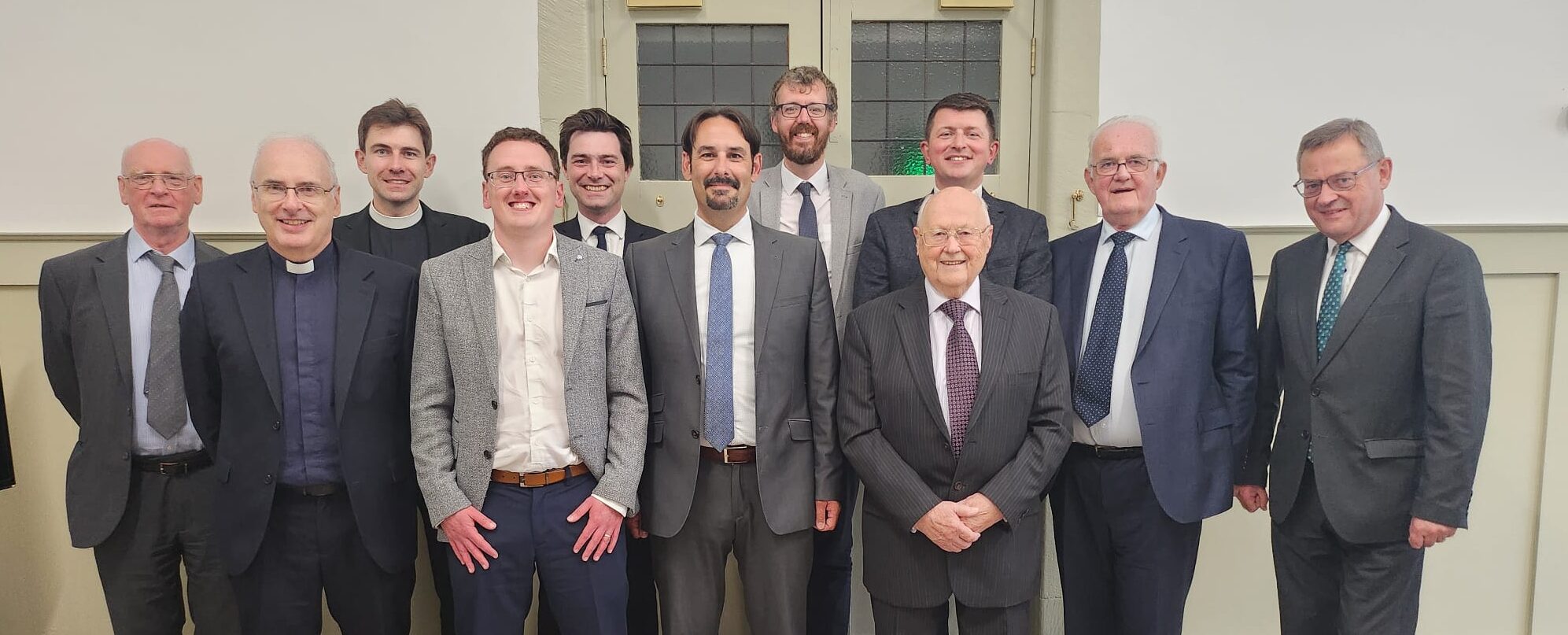
Back row left to right: Rev. Archie McPhail (North Edinburgh); Rev. Jonathan Baxter (Glasgow); Dr James Fraser (Stranraer); Rev. Stephen McCollum (Airdrie); Rev. Robert McCollum…