Airdrie Mission Team
1 Aug 2026 | Uncategorised
From mid-June to the beginning of July was a busy time for the Airdrie congregation as we had the American Mission Team, the Kids Club…


On this day 1625, Charles I becomes King on the death of his father James VI/I.
Although born in Scotland, Charles had left the country as a child, only returning in 1633 for his Scottish coronation. The same year he made William Laud Archbishop of Canterbury. Scottish church matters gained more attention from Charles and Laud after this, and their attempts to enforce the worship of the Church of England on the Scottish Kirk led to the signing of the National Covenant in 1638.
After the National Covenant was signed, King Charles I prepared for war to regain control of the Scottish Church. By July 1638, both sides were arming, and the General Assembly that met in Glasgow that November made war even more likely.
Fighting began in February 1639, and by March, the Covenanters captured Edinburgh Castle without firing a shot. By June, they forced him to sign the Treaty of Berwick. As part of the treaty, the king agreed to allow a free General Assembly. All future religious matters would be decided by church assemblies, and civil matters by parliament.
After defeat by the Covenanters during that First Bishops’ War, Charles was finally forced to recall the English Parliament to try and raise money to fight the Scots again. (From the start of his reign Charles had a troubled relationship with the English Parliament and in 1629 he dissolved it, and ruled without it for the next eleven years.) When Parliament refused to grant him the money, he dissolved it and went to war anyway.
During this time the Covenanters had been building up their army, and in August 1640, rather than wait for Charles to attack, they invaded England in defence of their religion and liberties. Soon, after a short battle at Newburn, they had captured Newcastle, one of the richest cities in England, which surrendered without a fight.
With Newcastle occupied by the Scottish Covenanters, Charles was then forced to call the Long Parliament in 1640. The members of the Parliament were angry at the king for going to war without having the money, and were suspicious of his actions against their fellow Protestants in Scotland. Civil war broke out between the king and the Parliament in 1642.
Following the signing of the Solemn League and Covenant, the Scots sent an army to help the English Parliament. In 1646, Charles surrendered to the Scottish Covenanter army, who handed him over to the Parliament in 1647. In January 1649, Charles was charged with high treason against the people of England, and executed.


From mid-June to the beginning of July was a busy time for the Airdrie congregation as we had the American Mission Team, the Kids Club…
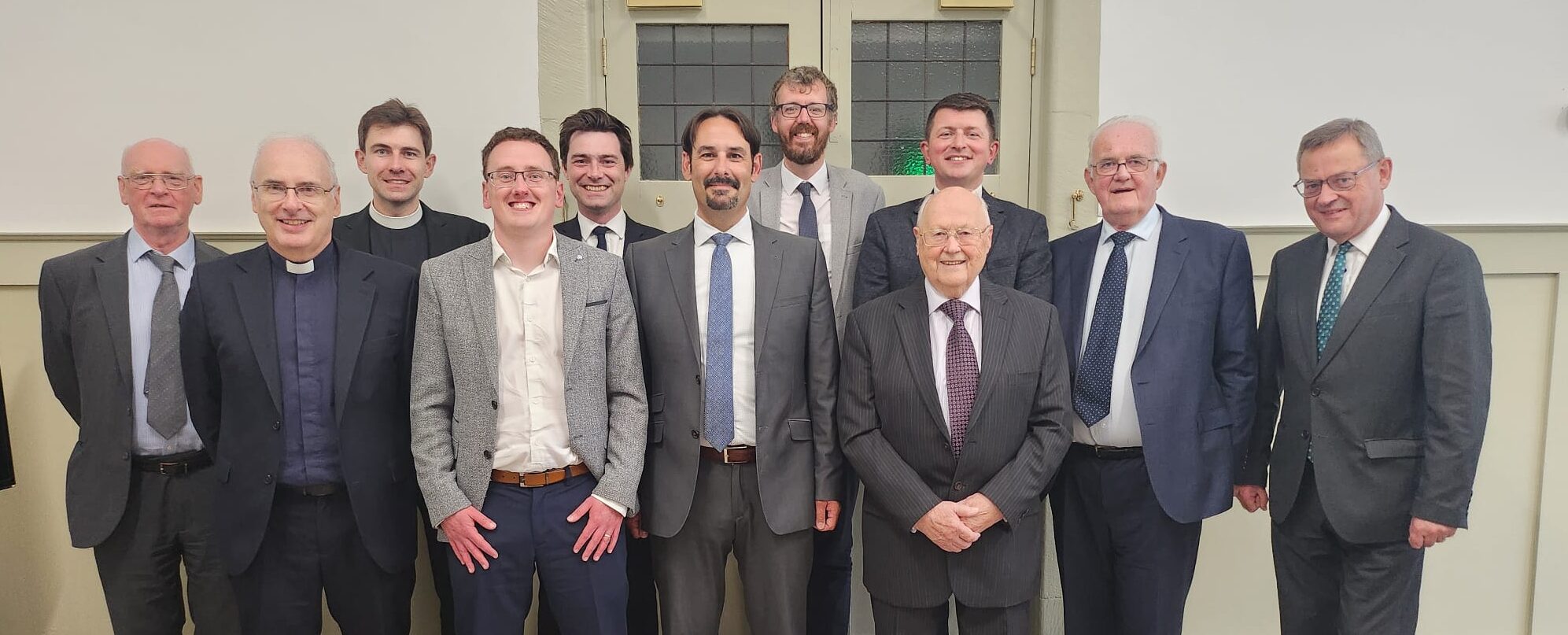
Back row left to right: Rev. Archie McPhail (North Edinburgh); Rev. Jonathan Baxter (Glasgow); Dr James Fraser (Stranraer); Rev. Stephen McCollum (Airdrie); Rev. Robert McCollum…